Why you feel itchy at night, even without a rash
Many people notice their skin becomes intensely itchy at night, even though no rash is visible. This can be confusing and frustrating. Night-time itching, also called nocturnal pruritus, often feels worse when you lie down or try to sleep. In most cases, itchy skin at night without a rash is harmless and linked to dry skin or environmental triggers. In some cases, persistent itching may have an underlying cause. Understanding why itching increases at night helps you find the right solution.
What causes this type of nighttime itching
When your skin starts itching at night without a visible rash, the cause is often not something you can immediately see. Doctors refer to this as pruritus without a rash, meaning the itch originates within the skin or the body rather than from a clearly visible skin condition.
Weakened skin barrier
One of the key underlying factors is the skin barrier. Your skin continuously loses small amounts of moisture through a natural process called transepidermal water loss (TEWL). When the skin barrier is healthy, this loss remains limited. However, if the barrier is weakened, more moisture escapes, leaving the skin drier and more sensitive to irritation.
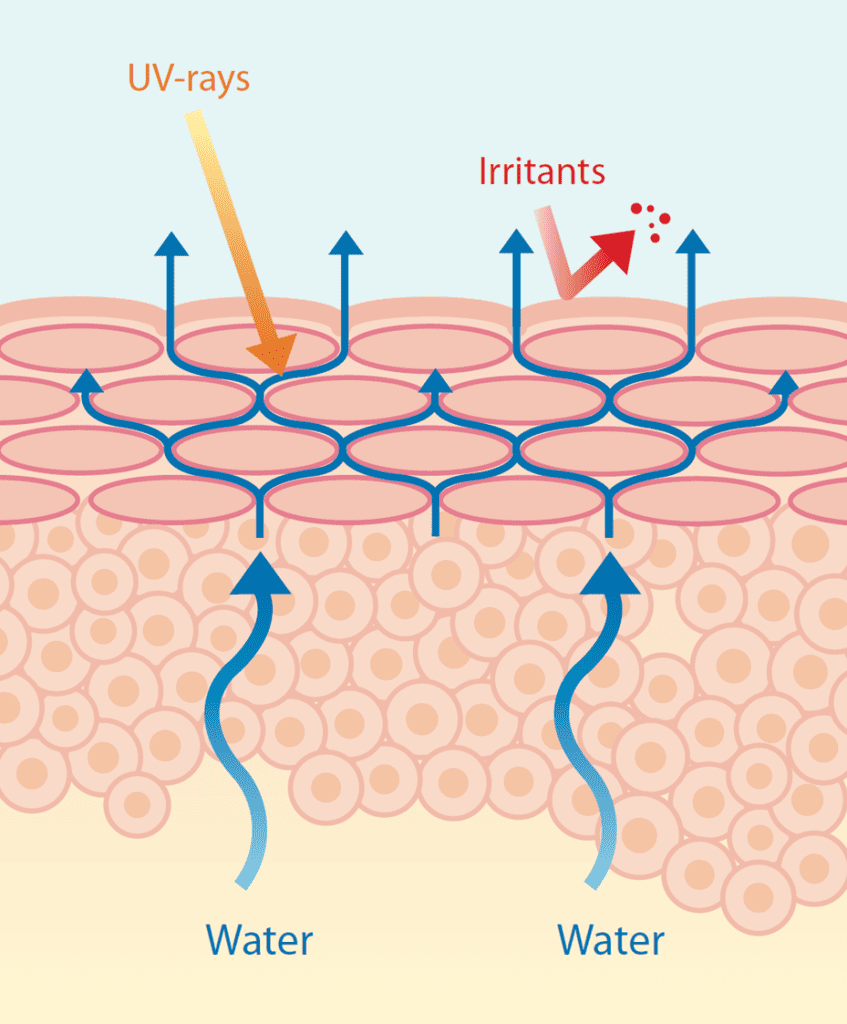
A weakened skin barrier allows moisture to escape and increases sensitivity to irritants, which can worsen itching at night
If your skin barrier is weakened, restoring it is key to reducing dryness and irritation. Learn how to repair a damaged skin barrier.
Natural changes at night
At night, several natural changes in the body can make this sensitivity more noticeable. Your circadian rhythm influences how your skin functions, including the release of signals that can trigger itching. At the same time, your body temperature rises slightly and blood flow to the skin increases, which can stimulate nerve endings and make the skin feel more reactive.
Daily habits and skin irritation
Because the skin becomes more sensitive at night, even mild triggers can lead to noticeable itching, especially when the skin is already dry or sensitive. Everyday habits such as long, hot showers, frequent washing, or the use of exfoliating products can gradually weaken the skin barrier.
While this may go unnoticed during the day, it often becomes more apparent in the evening.
Environmental triggers
In addition to these factors, your environment can also play a role. Warm bedding, synthetic fabrics, or residues from laundry detergents may irritate the skin during prolonged contact. Because the skin is more sensitive at night, even these mild triggers can lead to itching without causing a visible rash.
If your skin looks completely normal, without redness, bumps, or bite-like marks, an allergic reaction or insect bites are less likely, although mild allergic responses can sometimes occur without obvious skin changes.
Learn more about common skin rashes.
The role of stress
Stress can also play a role. As your body starts to relax, your nervous system may become more aware of itch signals, making the sensation feel stronger than it did during the day. This is often noticeable in areas such as the legs, arms or feet, where the skin tends to dry out more easily.
Possible internal factors
In some cases, persistent itching without a rash can be linked to underlying medical conditions. These may include hormonal changes, iron deficiency, thyroid disorders, or in rare cases, liver or kidney conditions.
These causes are uncommon, especially when itching is the only symptom. However, if the itching feels persistent or unexplained, it is important to seek medical advice.
Summary of causes
In short, night-time itching without a rash is most often linked to a weakened skin barrier, increased moisture loss and external triggers, although internal factors can also play a role in some cases.
Now that you understand what may be causing your itchy skin at night without a rash, the next step is to reduce these triggers and support your skin.
How to stop itching at night
If your itching is mainly caused by dry or sensitive skin, your sleep environment or daily habits, these adjustments can help reduce symptoms.
Improve skin hydration
Well-hydrated skin is less prone to itching. Apply a nourishing moisturiser before bedtime to support the skin barrier and reduce moisture loss. This helps limit dryness and irritation during the night.
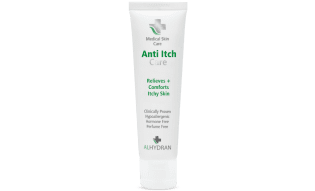
If you experience persistent itching, choose a product that not only hydrates but also actively soothes the skin and reduces the urge to scratch. A cream like ALHYDRAN Anti Itch Care is specifically developed to relieve itching, calm irritated skin and provide a cooling effect. It also helps reduce the burning sensation that can occur after scratching.
Keep the bedroom cool
A cooler bedroom can help reduce itching. Heat tends to aggravate the skin and make symptoms worse. Keep the room temperature lower and use breathable bedding, such as cotton, to prevent overheating.
Avoid irritants before sleep
Try to avoid anything that may irritate your skin before going to bed, as this can trigger or worsen itching.
Avoid:
- hot showers
- scented soaps
- harsh or drying skincare products
These simple adjustments help calm your skin, making it easier to rest without itching interrupting your sleep.
Break the itch scratch cycle
Scratching worsens irritation and can trigger more itching. Keeping nails short and applying soothing creams may help prevent scratching during sleep.
Treatments for itchy skin
If simple measures do not help, medical treatments may be recommended.
Antihistamines
In some cases, antihistamines can help reduce itch signals. They are most effective when itching is related to an allergic reaction, but may also be used to calm itch pathways in the skin, even when no visible rash is present.
Topical medicinal treatments
In some cases, creams with active ingredients such as menthol, pramoxine or corticosteroids may be used for temporary relief.
When night-time itching could be serious
In most cases, itchy skin at night without a rash is harmless and linked to dry or sensitive skin. However, if the itching feels persistent, intense or difficult to explain, it may be worth taking a closer look.
If the itching lasts for several weeks, does not improve with regular moisturising, disrupts your sleep most nights, or is combined with symptoms such as fatigue, unexplained weight changes or a general feeling that something is “off”, it is advisable to speak to a healthcare professional.
Summary
You may feel itchy at night, even when there’s no visible rash. The itching often worsens due to biological changes that occur during sleep, including increased skin temperature and water loss.
In most cases the cause is harmless, such as dry skin or environmental triggers. However, persistent itching without visible skin changes can sometimes relate to underlying medical conditions. Understanding the possible causes and improving skin hydration, sleep environment and skincare habits can significantly reduce night-time itching.
Your questions about itchy skin without a rash
Why do I itch more when I lie in bed?
Your body temperature rises slightly at night, and your skin loses more moisture. This can make your skin drier and more sensitive. At the same time, increased blood flow and nerve activity can intensify itch signals. Because there are fewer distractions when you lie down, the itching often feels stronger.
Why are my legs itchy at night?
Dry skin is the most common cause, especially on the legs. Reduced circulation and increased nerve sensitivity at night can make the itching feel more intense.
Read more about why your legs can feel itchy.
Can stress cause itching without a rash?
Yes. Stress can activate nerve pathways that trigger itching sensations even when the skin appears normal.
What deficiency causes itchy skin?
Iron deficiency is one possible cause of persistent itching without visible skin changes.
References
- Ständer, S., et al. (2016). Clinical classification of itch. Journal of the American Academy of Dermatology.
- Van Leen, M. W. F., Hoeksema, H., & Schols, J. M. G. A. (2021). MMRC (ALHYDRAN®), an interesting treatment option for a disrupted skin barrier. Journal of Gerontology & Geriatric Research, 7, 083.
- Yosipovitch, G., & Bernhard, J. (2013). Chronic pruritus. New England Journal of Medicine.