Burns: treatment & aftercare

Burns are common injuries that vary in severity: from minor first-degree burns to deep third-degree burns. Immediate treatment is essential, but recovery doesn’t stop when the wound closes. Supporting your skin’s long-term healing is crucial to avoid complications like redness, itching, or scarring.

First aid for burns

Quick and correct first aid can make a big difference in burn recovery. Follow these essential steps, based on NHS guidelines:

  • Stop the burning process, but always ensure your own safety first.
  • Remove clothing and jewellery near the burn, unless it’s stuck to the skin.
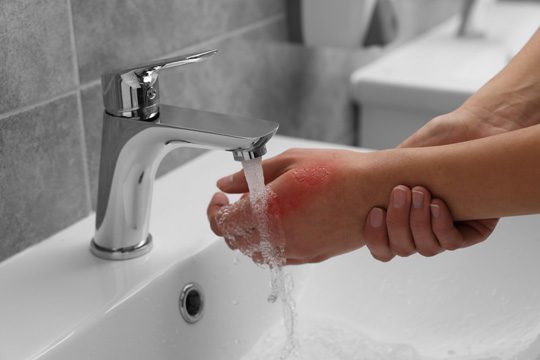
  • Cool the burn with lukewarm (not cold) running water for at least 20 minutes.
  • Seek medical help if needed: if the burn is large, deep, on sensitive areas (face, hands, joints), or caused by chemicals or electricity.

For additional information on first aid for burns and when to go to the hospital or call 111, check the NHS website.

First aid for burns

Types of burns

  • First-degree burns are mild surface burns (e.g. mild sunburn). The skin may be red and dry but usually heals within a few days to a week. Scarring is rare, unless there’s infection or excessive sun exposure during healing.
  • Second-degree burns These burns go deeper into the dermis and often cause blisters, swelling, and intense pain. There’s a high risk of long-term scarring, especially without proper aftercare.
  • Third-degree burns destroy destroy all layers of the skin and can affect underlying tissues. The area may appear white, charred, or leathery. Scarring is almost always inevitable, even after surgery or skin grafting.

While first-degree burns (such as mild sunburn) heal without scarring, deeper burns require specialist care once the wound is closed. ALHYDRAN plays a key role in supporting this crucial phase of healing.

Are you dealing with a scar after a burn? Learn how to care for it properly on our burn scar page

Why aftercare matters

Even after a burn has healed on the surface, the skin remains vulnerable. Common long-term complaints are:

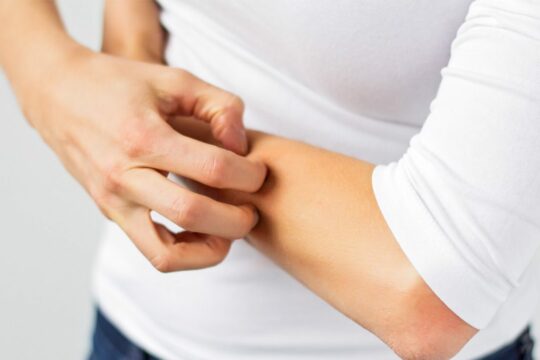
  • Itchy and painful skin
  • Tightness or pulling sensations
  • Reduced mobility near joints
  • Discolouration and redness
  • Increased sensitivity to sunlight
  • Raised or thickened scar tissue (hypertrophic scars or keloids)

Proper aftercare hydrates, protects, and helps your skin regenerate. With its medical-grade formula, ALHYDRAN provides the targeted care your skin needs.

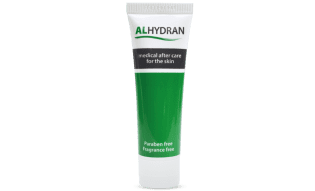
ALHYDRAN: medical aftercare for burns

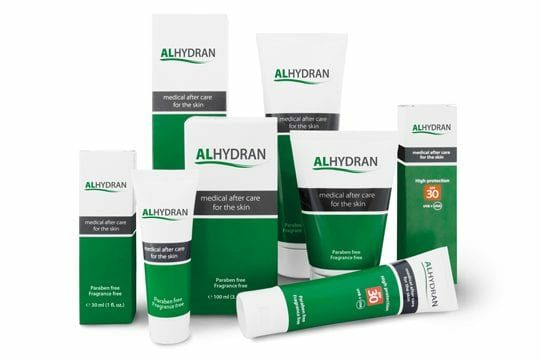
ALHYDRAN is not a first-aid cream, but it plays a crucial role after the wound has closed. Its powerful formula supports long-term skin recovery and helps prevent ongoing complaints:

  • Hydrates the disrupted skin barrier
  • Reduces redness, itching, and dryness
  • Restores elasticity and improves comfort
  • Scientifically proven to support burn aftercare

It is used in burn centres and hospitals worldwide for over 20 years and trusted by professionals to restore comfort and skin quality after burns.

Customer reviews

ALHYDRAN is a great product. I'm using it after an ugly burn on my hand. The visual result is fantastic! Never thought it would be that good. Thanks.

Chris

Recently I had a serious accident, now I have 1st and 2nd degree burns on my chest and stomach. After applying ALHYDRAN I felt a strong relief of the itching, pain and dryness of my bandaged skin. Within a few days my skin became smoother and the scars faded.

Robby

I have used ALHYDRAN cream for a burn on my hand. The burn has healed nicely and is nearly no longer visible.

Sylvia

How does ALHYDRAN help burn treatment?

ALHYDRAN combines fresh Aloe Vera gel with high-quality ingredients that provide:

  • Deeply hydrate the skin to restore moisture balance
  • Reduce trans-epidermal water loss (TEWL) by forming a semi-occlusive barrier
  • Relieve common scar symptoms such as redness, itching and pain
  • Improve skin elasticity and suppleness to reduce tightness and discomfort
  • Support long-term healing and help improve the appearance of burn scars

Sun protection for burned skin

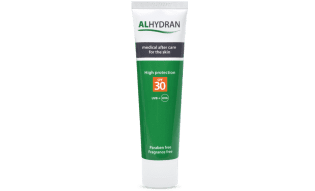
Burned skin is extra sensitive to sunlight, even long after healing. Use ALHYDRAN SPF 30 for the same intensive hydration with broad-spectrum UV protection, helping prevent hyperpigmentation and further damage.

Scientifically proven effectiveness

A scientific study by Ghent University focused on scar care after burns. The results were published in the respected medical journal Burns.
Researchers investigated how well hydrating creams – including ALHYDRAN – work for treating burn scars. The findings of the research can be summed up in 2 words: ALHYDRAN works.

The research assessed three key areas:

  • Skin sealing: How well the cream prevents moisture loss.
  • Hydration: The ability to moisturise scarred skin effectively.
  • Duration: How long the beneficial effects last.

ALHYDRAN scored highly in all areas, thanks to its unique formula that includes freshly processed Aloe Vera gel. The study used a technique called tape stripping to create identical controlled skin lesions on participants, allowing direct comparison between untreated skin, skin treated with hydrating cream, and healthy skin. The result: ALHYDRAN significantly improved hydration and skin condition, confirming its role as a powerful treatment for burn scars.

Scar management by means of occlusion and hydration: A comparative study of silicones versus a hydrating gel-cream.
Author(s): Hoeksema H, de Vos M, Verbelen J, Pirayesh A, Monstrey S.
Publication: Burns 2013

When should you use ALHYDRAN?

  • Only after wound closure: ALHYDRAN is not suitable for open wounds. Begin application once the skin is fully closed and dry.
  • For long-term scar care: Apply regularly to burn scars, grafted skin, and the surrounding area.
  • During sun exposure: Burn scars are highly sensitive to UV rays. Use ALHYDRAN SPF 30 to hydrate the skin and protect it from further damage caused by sunlight.

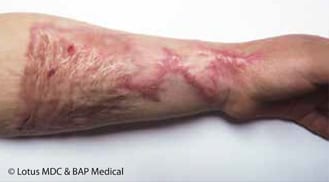
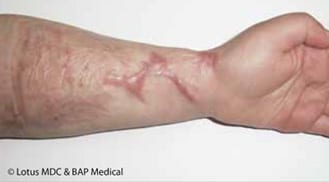
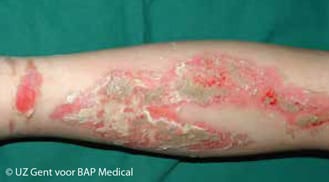
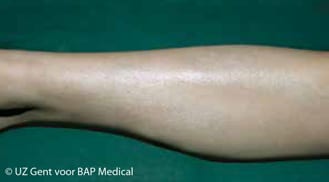
After 4 months ALHYDRAN

Hot water burn

  • Improves skin flexibility
  • Reduces itching and redness

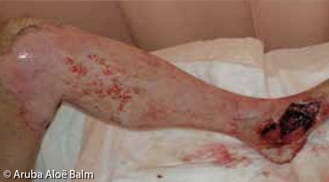
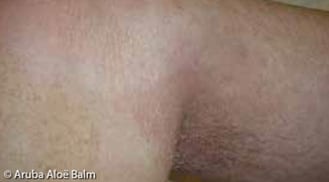
After 1 year ALHYDRAN

Flame burn

  • Excellent color results
  • Improved elasticity of the scar

After 14 months ALHYDRAN

Second degree burn

  • Skin improved rapidly
  • Itching disappeared immediately

Literature references

We believe it is important that the claims we make have a solid basis. The information is based on various sources:


Scar management by means of occlusion and hydration: A comparative study of silicones versus a hydration gel-cream.
View the article on PubMed

Publication: Burns 2013
Author(s): Hoeksema Hde Vos MVerbelen JPirayesh AMonstrey S.


Moisturisers in scar management following burn: A servey report.
View the article on PubMed

Publication: Burns 2017
Author(s): Klotz T, Kurmis R, Munn Z, Heath K, Greenwood J.


Two years of experience with a new product based on aloe vera for hydration of burn scars.
View the Article (PDF)

Publication: Presented at European Burn Assosiation (EBA) congress, Budapest, Hungary, 2007
Author(s): S. Monstrey, MD, PhD, A. Pirayesh, MD, E. Lambrecht, RN, S. Lauwaert, RN, J. Verbelen, RN, MN, H. Hoeksema, RC
Institution: Burn Centre, University Hospital Ghent, Belgium


‘Itching, is there a remedy?’ a pilotstudy with a rehydration gel-cream in burnpatients.
View the article (PDF)

Publication: Presented at European Burn Assosiation (EBA) congress, Budapest, Hungary, 2007 & The International Society for Burn Injuries (ISBI), Montreal, Canada, 2008
Author(s): H.J. van Kempen, RN, BHSc, J. Dokter, MD, I.M.M.H. Oen, MD
Institution: Burn Centre Rotterdam, the Netherlands


Effect of scar treatment products on unpleasant physical manifestations in patients suffering from extensive burn scarring.
View the article (PDF)

Publication: Presented at German-speaking Working Group for Burn Treatment (DAV), Styria, Austria, 2010
Author(s): Dr. med. Hans Ziegenthaler
Institution: Burn Rehabilitation Centre, Bad Klosterlausnitz, Germany,


Scars after large surface thermal burns – Registration of Quality of Life and therapeutic influence of Alhydran.
View the article (PDF)

Publication: Presented at European Burn Assosiation (EBA) congress, The Hague, the Netherlands, 2011
Author(s): Dr. med. Hans Ziegenthaler
Institution: Burn Rehabilitation Centre, Bad Klosterlausnitz, Germany


Application of Alhydran in the treatment of pathologic scars after cryoshape therapy.
View the article (PDF)

Publication: Presented at European Burn Assosiation (EBA) congress, The Hague, the Netherlands, 2011
Author(s): Dr. Uberto Giovannini
Institution: Dep. of Plastic Aesthetic and Reconstructive Surgery, Metz, France


Development of a new brochure making aftercare of burns more understandable for patients.
View the article (PDF)

Publication: Presented at European Burn Assosiation (EBA) congress, Vienna, Austria, 2013
Author(s): Henk Hoeksema, Katrien van Gastel, Veerle van Geertruy, Pieter Lafaire, Jozef Verbelen, Stan Monstrey
Institution: Burn Centre, University Hospital Ghent, Belgium


Psychological wellbeing – Scar.
View the article (PDF)

Publication: Presented at European Wound Management Association (EWMA) congress, Madrid, Spain, 2014
Author(s): Wound professional, United Kingdom, Stuart Ashman, Sara-Jane Kray, Tyne & Wear, UK.


Use of Alhydran cream in the treatment of burn scars following a chemical explosion – a case study.
View the article (PDF)

Publication: Presented at European Burn Assosiation (EBA) congress, Hannover, Germany, 2015
Author(s): Rina Rijkenberg
Institution: Scar and Burns Aftercare Department, Oosterbeek, the Netherlands


The effect of a topical cream application on water distribution in healthy skin and burn scars: pilot project.
View the article (PDF)

Publication: Presented at European Burn Assosiation (EBA) congress, Rotterdam, the Netherlands, 2018
Author(s): P. Moortgat, M. Anthonissen, J. Meirte, U. van Daele, T. van Hullebusch, C. Lafaire, L. de Cuyper, K. Maertens
Institution: OSCARE – Organisation for burns, scar after-care and research, Antwerp, Belgium,


International Clinical Recommendations on Scar Management.
View the article on PubMed

Publication: Plastic and reconstructive surgery, 2002
Author(s): Mustoe TA, et al.

Start your burn recovery today

Support healing with deep hydration and effective UV protection

  • Reduces itching, redness and pain

  • Makes the skin more supple

  • Helps prevent scar formation

Scar Guide Request the free Scar Guide
Scar Guide

Free Scar Care Guide

Start caring for your scar with expert-backed guidance. Download your free guide and take the first step in scar care.

"*" indicates required fields

Consent for marketing emails
This field is for validation purposes and should be left unchanged.