Eczema: causes, symptoms and care

Eczema can make your skin feel itchy, dry and uncomfortable. Flare-ups may affect your sleep, concentration and daily routines. Understanding what eczema is and how to care for your skin helps reduce flare-ups and supports long-term skin health.
What is eczema?

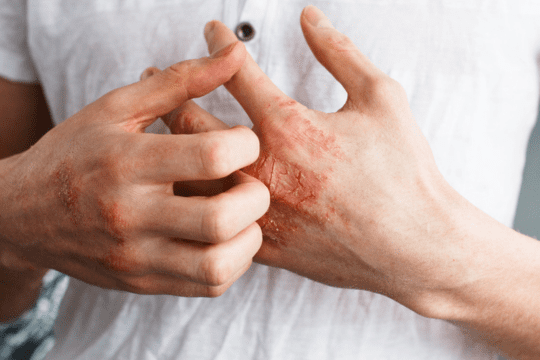
Eczema is a chronic inflammatory skin condition that affects people of all ages. It is characterised by periods of flare-ups and calmer phases, often causing itching, redness and dry skin.

Eczema is not contagious, but it often develops in early childhood and can persist or appear later in life.

What causes eczema?

Eczema does not have a single cause. Several factors usually play a role, but many people with eczema have an inherited tendency towards a weaker skin barrier.

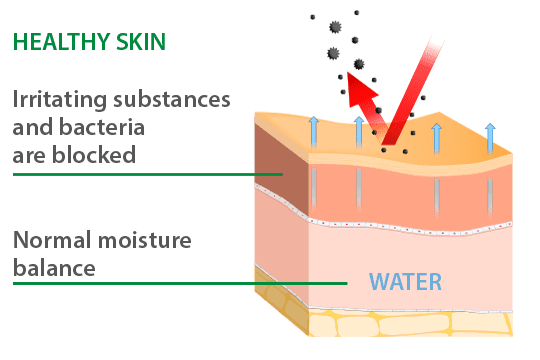
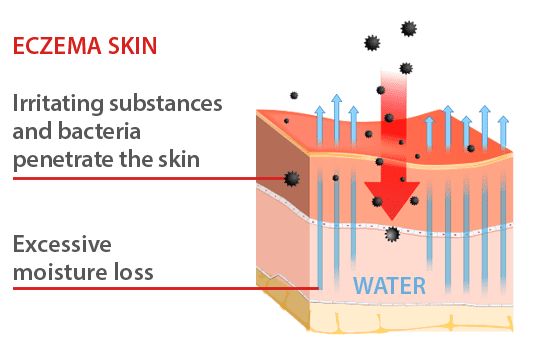
Healthy skin normally retains moisture and blocks irritants. In eczema, this barrier is compromised, which leads to increased transepidermal water loss (TEWL). As a result, the skin becomes dry, more sensitive to irritation and more prone to inflammation.

Diagram comparing healthy skin and eczema skin, showing how a damaged skin barrier allows irritants to enter and increases moisture loss: healthy skinDiagram comparing healthy skin and eczema skin, showing how a damaged skin barrier allows irritants to enter and increases moisture loss: eczema skin.

Common triggers for eczema include:

  • Harsh soaps or detergents
  • Cold or dry weather
  • Heat and sweating
  • Stress
  • Allergens such as dust mites or pollen
  • Rough fabrics like wool

Identifying personal triggers helps reduce flare-ups.

Common eczema symptoms

Eczema usually causes a combination of visible skin changes and uncomfortable sensations. Typical skin symptoms are:

  • Persistent itching
  • Red or inflamed skin
  • Dry, rough or scaly patches
  • Cracked or painful skin
  • Oozing or crusting in more severe cases

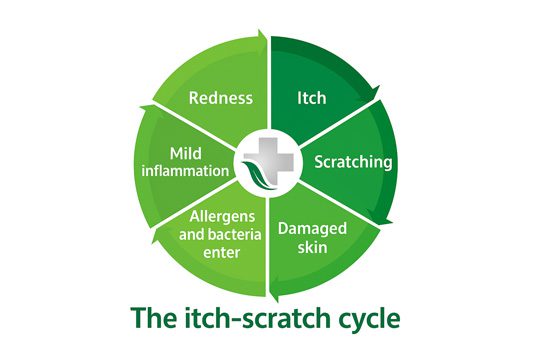
Itching is a key symptom of eczema and often leads to scratching, which can further irritate the skin, increase inflammation and raise the risk of infection. This process is known as the itch-scratch cycle.

The itch-scratch cycle showing how scratching leads to skin damage, redness and inflammation that make the itch return.

Where eczema often appears

Eczema can develop on different parts of the body, but certain areas are more prone due to friction, exposure, or moisture.

  • Face and neck: The skin here is thin and constantly exposed to weather, air pollution and skincare products, which makes it more sensitive to irritation, redness, dryness and flaking.
  • Hands and wrists: Frequent contact with water, soap and cleaning products damages the skin barrier, often leading to severe dryness, cracks, redness and persistent itching.
  • Arms and legs: These areas are exposed to cold air, dry indoor heating and clothing friction, which can cause dry, itchy patches and ongoing irritation, especially during colder months.
  • Elbows and knees: Thicker skin combined with constant movement and friction increases dryness, resulting in rough, scaly skin and stubborn itching.
  • Skin folds: Warm, moist areas where skin rubs together are more vulnerable to irritation from sweat and friction, often causing redness, soreness and worsening symptoms in warmer conditions.
    In babies, eczema often appears on the cheeks and scalp. In adults, hands and flexural areas are common sites.

Types of eczema

Eczema is an umbrella term for several related skin conditions.

Atopic eczema

Atopic eczema is the most common form. It is linked to genetic factors and often occurs alongside asthma or hay fever. The skin barrier is structurally weaker, which leads to chronic dryness and itching.

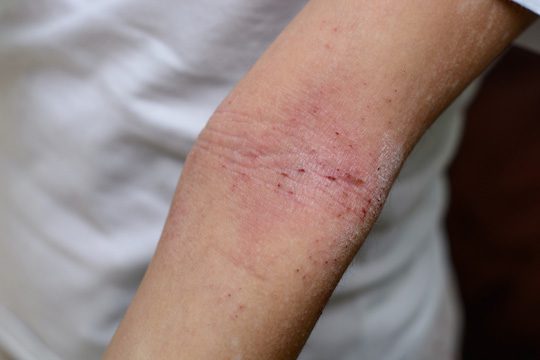
Atopic eczema on the inner elbow with red, dry and irritated skin caused by a disrupted skin barrier.

Atopic eczema often appears in skin folds, where dryness and itching can become more intense.

Dyshidrotic eczema

This type mainly affects hands and feet. Small, itchy blisters can appear and may cause pain or burning sensations.

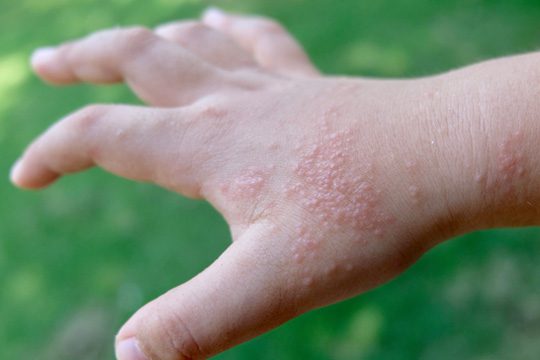
Dyshidrotic eczema on the hand with small itchy blisters and irritated skin.

Dyshidrotic eczema causes small, itchy blisters on the hands and can be very uncomfortable.

Contact dermatitis

Contact dermatitis develops when the skin reacts to an irritant or allergen, such as soaps, fragrances or metals. Removing the trigger is essential for improvement.

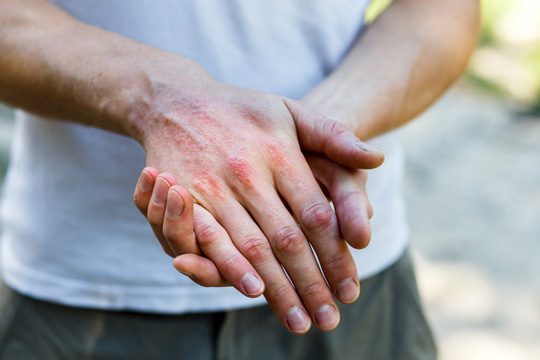
Hand eczema with red, dry and irritated skin on the back of the hands.

Hand eczema often causes redness, dryness and irritation, especially after frequent contact with water or detergents.

Other forms of eczema

Some types of eczema are less directly linked to daily skin care routines, but still involve inflammation and disruption of the skin barrier.

  • Seborrheic eczema: Affects areas with many oil glands, such as the scalp, eyebrows and sides of the nose. It often causes redness and greasy or flaky patches.
  • Nummular eczema: Appears as round or coin-shaped patches of irritated, itchy skin, usually on the arms or legs.
  • Stasis eczema: Develops on the lower legs, often in people with poor circulation. Swelling, dryness and discoloration are common symptoms.
    Each type has specific triggers, but skin barrier disruption is a shared factor.

How eczema is treated

Eczema treatment focuses on symptom control and skin barrier support.

Medical treatments

Doctors may prescribe:

  • Topical corticosteroids to reduce inflammation
  • Calcineurin inhibitors for sensitive areas

These treatments are usually combined with daily skin care.

Daily eczema care and hydration

Consistent daily care is a cornerstone of eczema management. Well-hydrated skin is more resilient and less reactive. Because eczema-prone skin loses moisture more quickly, consistent hydration helps reduce dryness, itching and skin sensitivity.

A well-balanced eczema cream usually contains:

  • Humectants to attract moisture
  • Occlusive ingredients to limit water loss
  • Emollients to soften and protect the skin

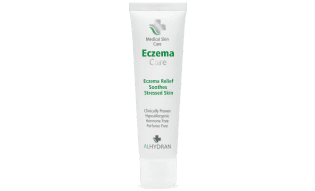
Products that focus on hydration, occlusion and skin softening are often better suited for eczema-prone skin. An example of daily care that supports these needs is ALHYDRAN Eczema Care.

This cream is a specific variant of the regular ALHYDRAN formulation, adapted for eczema-prone skin and based on the same scientific principles of hydration and barrier support. It helps keep the skin hydrated and reduces that rough, tight feeling that often comes with eczema.

More information about the scientific background behind this approach is available on the clinical and scientific evidence page. A separate case study page illustrates how this type of skin care is used in practice.

Recommended by healthcare professionals

Doctors and dermatology specialists share their experience with Alhydran in the management of eczema.
Dr. Menno Gaastra
Dermatologist Centrum Oosterwal, Dermatology Department (NL)

For people with dry skin caused by eczema, ALHYDRAN can be a good option for a neutral maintenance treatment in addition to hormone cream.

Dr. M.D. Njoo
Dermatologist ZGT Hospital, Dermatology Department (NL)

I recommend ALHYDRAN for the treatment of Atopic (Constitutional) eczema because of its excellent nourishing and hydrating properties. With Aloe Vera rather than water as the primary ingredient, ALHYDRAN provides optimal skin hydration.

Eczema and itching

Itching is one of the most distressing eczema symptoms. It results from dryness, inflammation and nerve stimulation in damaged skin.
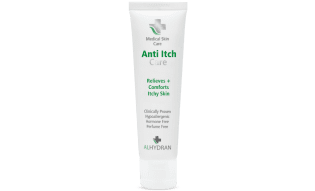
As explained earlier in the itch–scratch cycle, scratching may provide temporary relief but ultimately worsens the condition. Regular hydration and soothing skin care can help reduce itch intensity and improve comfort. For pronounced itching, supportive care such as ALHYDRAN Anti Itch Care may be used alongside daily moisturising.

What our customers say about soothing itchy skin

So far, the only cream that relieves my itching.

Angelica

Provides relief immediately after application and has a long-lasting effect. Great product, I’m very satisfied. Truly recommended

Rene

Living with eczema

Living with eczema often means paying attention to daily habits as well as recognising when extra support is needed. Small, consistent choices can make a noticeable difference in how your skin feels over time.

Using mild, soap-free cleansers helps limit irritation, while regular moisturising supports the skin barrier, even during calmer periods. Avoiding known triggers where possible can reduce flare-ups and keeping nails short helps prevent further skin damage caused by scratching.

In eczema care, consistency usually matters more than occasional intensive treatment.

When to seek medical advice

Daily skin care is often enough to keep symptoms under control, but professional advice is important if:

  • Symptoms continue to worsen despite consistent care
  • The skin shows signs of infection
  • Eczema interferes with sleep or overall quality of life

Frequently asked questions about eczema

No. Eczema cannot be passed from person to person.

Eczema symptoms can sometimes disappear for long periods, especially in childhood or with good skin care. Some people experience few or no symptoms for years, while others continue to have flare-ups or develop eczema later in life.

There is currently no cure for eczema. The condition itself does not disappear, but with consistent skin care and barrier support, symptoms can often be managed effectively.

No. Eczema and psoriasis are different skin conditions, but they are often confused because both can cause red, scaly and itchy patches on the skin. The underlying causes are different. Eczema is mainly linked to a weakened skin barrier and sensitivity to triggers, while psoriasis is an autoimmune condition that causes rapid skin cell turnover.

Summary: understanding eczema

Eczema is a chronic skin condition marked by dryness, itching and inflammation. A disrupted skin barrier plays a central role, leading to increased moisture loss and sensitivity.
Effective eczema care focuses on:

  • Supporting the skin barrier
  • Maintaining hydration
  • Reducing triggers and flare-ups

With the right daily routine and supportive skin care, living with eczema becomes more manageable and comfortable.